

History tells a story about Alexander the Great. One day, a poor beggar sat by the roadside as Alexander passed by. The man had no right to expect anything from the king, yet he lifted his needy hand. To everyone’s surprise, Alexander gave him several gold coins. One of his attendants questioned, “Sir, copper coins would be enough for a beggar. Why give gold?” Alexander replied, “Copper coins may suit the beggar’s need, but gold coins suit Alexander’s giving,” Alexander replied.
This story is a small picture of how God deals with us. We may expect little, but His giving reflects who He is. The Bible reminds us of this in 2 Corinthians 12:9: “My grace is sufficient for you, for My strength is made perfect in weakness.”
When Jesus began His ministry, He first went through baptism, fasting, and temptation. Soon after, He began choosing His disciples. By the Sea of Galilee, He called Simon Peter with the words, “Follow Me.”
In Jewish culture, this invitation carried deep meaning. From childhood, boys studied the Torah under teachers and rabbis. At around twelve years old, they were tested. Those who did well were invited by a rabbi to “follow me.” This meant training closely under the rabbi and one day carrying on his teaching. For families, such a calling was precious and honorable.
But not every boy succeeded. Those who failed were sent home to work in their father’s trade. Peter was one of them, becoming a fisherman like his father.
That is why Jesus’ words to Peter were so powerful. When Peter heard “Follow Me,” he knew this was not just an invitation—it was a second chance. He, the one who once failed, was now chosen by the greatest Teacher of all.
From that day on, Peter longed to prove himself. He stayed close to Jesus, eager to show his loyalty. When soldiers came to arrest Jesus, Peter drew his sword and cut off a man’s ear. He wanted to protect his Master.
Later, during the Passover meal, Jesus told Peter that he would deny Him three times before the rooster crowed. But Peter insisted, “Even if all are made to stumble because of You, I will never stumble” (Matthew 26:33). His desire to be the strongest disciple blinded him to his own weakness.
That night, after Jesus was arrested, Peter followed at a distance. A servant girl recognized him and said, “You were with Jesus.” Peter denied it. Twice more, he denied knowing Jesus, even swearing to prove it (Matthew 26:74). After the third denial, Jesus turned and looked at him. Peter realized what he had done and went out, weeping bitterly (Luke 22:61).
One sin was enough to crush him. He believed he had failed beyond repair. Like before, when students who failed returned to their father’s trade, Peter went back to fishing. He felt his calling was over.
Grace on the Shore
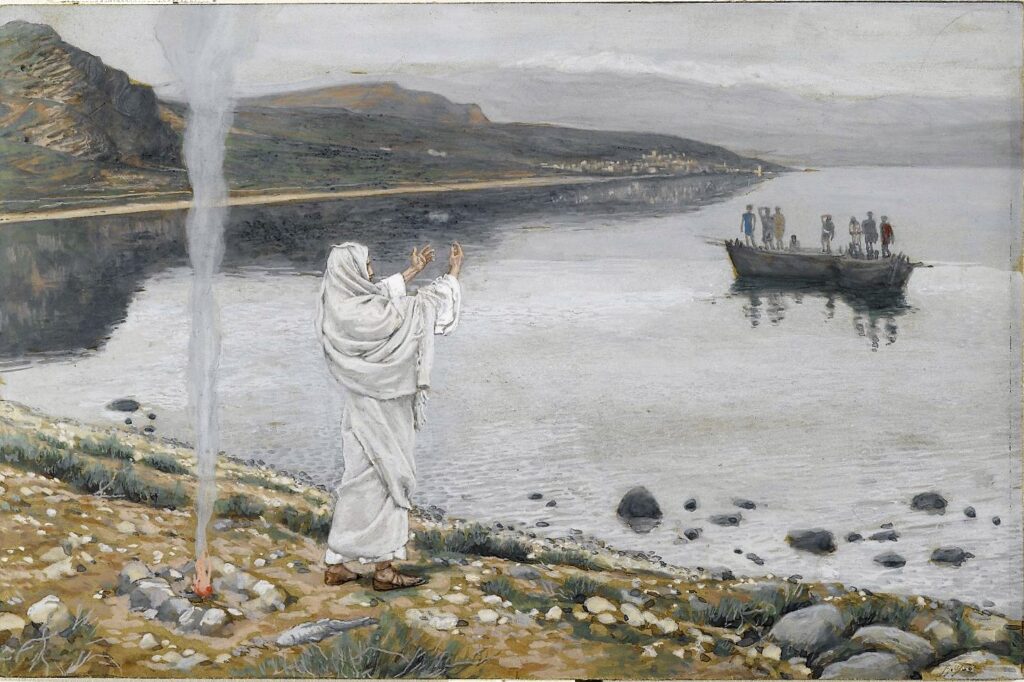
But Jesus does not leave us in our failures. After His resurrection, He came to the shore where Peter was fishing. He called to him, shared a meal, and then asked three times, “Simon, son of Jonah, do you love Me?” (John 21:15).
Each time Peter answered, “Yes, Lord, You know that I love You” (John 21:15). Three denials were answered by three confessions of love. In this beautiful moment, Jesus restored Peter—not only forgiving him but also giving him purpose again: “Feed My sheep.”
This is the power of grace. Grace does not only wipe away our guilt; it lifts us up, restores us, and sends us out with a mission.
Grace for Our Lives
Peter’s story is our story too. We may not stand in the courtyard denying Jesus with our lips, but in many ways, we deny Him—when we sin knowingly, when we compromise, when we place other things above Him. Each of these is like Peter’s denial.
Yet the good news is this: Jesus comes searching for us. He does not wait for us to climb back into His presence on our own. Just as He came to Peter by the sea, He comes to us in our guilt, our weakness, and our brokenness.
You may feel like Peter today—ashamed, guilty, convinced you have failed too many times. But God’s grace is not based on your worth; it is based on His love. Like Alexander who gave gold instead of copper, God gives us grace in abundance. But unlike Alexander, He gives not out of pride, but out of deep mercy and love.
Think about this: how many times have you denied Jesus in your life? How many times have you failed to keep your promises to Him? How many times have you “nailed Him again” by choosing sin?
And yet, His grace still seeks you. His voice still calls, “Follow Me.” His love still asks, “Do you love Me?”
Grace means there is always another chance. Grace means Jesus does not treat us as the world treats failures. Grace means your story is not finished.
Peter went from failure to leader, from brokenness to boldness, because grace restored him. The same grace is available to you today.
So, if you feel unworthy, if you feel too far gone, remember: His grace never lets go. The King of Kings is waiting for you, not with copper coins, but with gold—because His giving reflects His heart.