
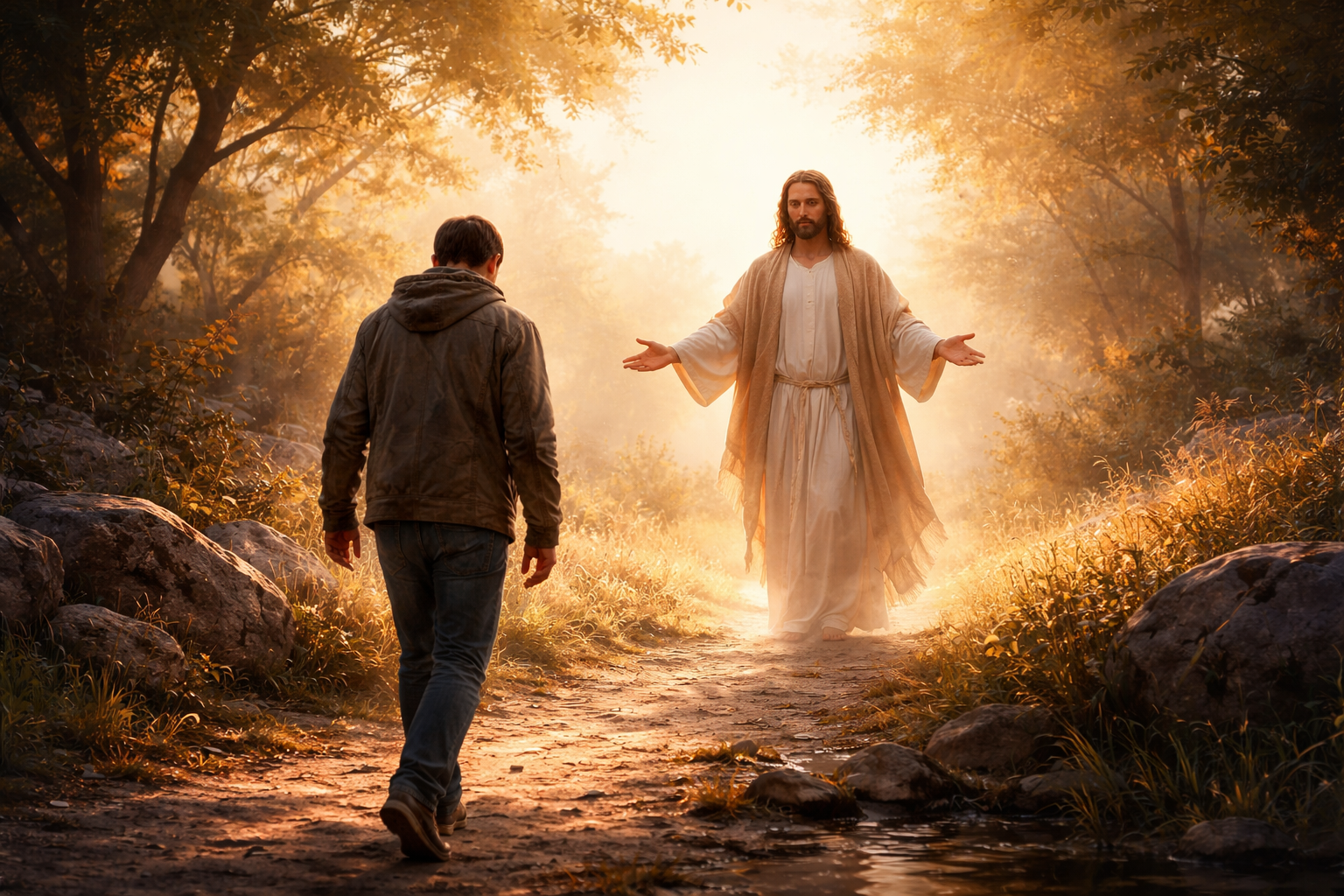
Many of us might have imagined that God is waiting at the end of a long road of self-improvement. That somewhere beyond our bad habits, our secret sins, our inconsistencies, there will come a day when we are finally clean enough to approach Him. So we delay. We tell ourselves we will serve when we are better. When we pray more. When we sin less. When our hearts feel less divided.
Until then, we stand at a distance.
For a long time, that might be how many of us Christians thought about God. We believed there was a version of ourselves that He would finally approve of — a future version who was disciplined, gentle, patient, and pure. That version of ourselves would read Scripture without distraction, serve without pride, love without selfishness. That person would be worthy of drawing close to Him.
But the present version of us felt like an unfinished draft. Too impatient. Too easily hurt. Too distracted. Too human.
So we waited.
We told ourselves we would serve God when our hearts became more sincere. We would pursue Him seriously when our lives became less messy. We would deepen our relationship with Him once we stopped failing in the same ways.
But the strange thing about waiting to become perfect is that perfection never arrives. Life continues, days pile up, and the heart remains stubbornly human. Still learning. Still stumbling. Still needing mercy.
What we should realize by then is perhaps God was never asking for the perfected version of ourselves. Perhaps He had been calling the unfinished one all along.
When you read the stories in Scripture again, you might notice something you might’ve had overlooked before. God did not wait for people to become whole before inviting them. He met them in the middle of their incompleteness.
When Moses encountered God at the burning bush, his first response was not confidence but fear and excuses. “O my Lord, please send someone else,” he said, after insisting he was slow of speech and not fit to lead (Exodus 4:10–13). Yet God did not wait for Moses to become eloquent before using him.
When Jesus called His disciples, they were not scholars or spiritual elites. They were fishermen in the middle of their ordinary lives. And His invitation was not complicated. It was simply, “Follow me” (Matthew 4:19).
Even Peter, who would later become a pillar of the early church, was impulsive and often wrong. He stepped out of the boat in faith only to sink moments later. He promised loyalty to Jesus and then denied Him three times in a single night (Luke 22:54–62). Yet after the resurrection, Jesus did not discard him. Instead, He met Peter in his failure and gently asked him three times, “Do you love me?” before entrusting him again with the words, “Feed my sheep” (John 21:15–17).
None of them were whole when they were called. They became whole while walking with God.
This says a lot about our hesitation to come to God. It was not humility. It was our own misunderstanding of His grace. We tend to believe that our efforts to improve would make us acceptable to Him, when in reality it was His mercy that makes any of us able to stand before Him at all. Jesus Himself said, “Those who are well have no need of a physician, but those who are sick. I came not to call the righteous, but sinners” (Mark 2:17). God was never waiting for the polished version of ourselves. He was waiting for you and me— the confused, imperfect, sometimes faithless version of ourselves— to stop standing outside the door.
There is something deeply human about wanting to present our best self before someone we love. We clean the house before guests arrive. We dress our best for important occasions. We want to be seen in our most presentable form. But the love of God works differently. He is not impressed by the version of us that looks most put together. He is drawn to the honest heart that finally stops pretending.
The truth is that none of us arrive whole. We arrive tired, distracted, sometimes ashamed, sometimes unsure. Our prayers wander. Our motives mix together. Our faith trembles. And yet God receives us there.
Not after the transformation— but before it.
It is not perfection that begins the relationship with God. It is surrender. The simple, humble decision to stop waiting for a better version of ourselves and to come as we are. To serve Him with trembling hands. To pray with imperfect words. To offer a heart that is still learning how to love Him fully.
And perhaps this is the real miracle of grace: God does not ask for a finished person. He asks for a willing one. The rest— the healing, the shaping, the gradual work of becoming— happens in His presence. Not outside of it.
So maybe the invitation has always been simpler than we thought. Not “come when you are ready.” Not “come when you are worthy.”
Just come.
As you are.