Telos: Transformation, Maturity, and Christ-Centered Discipleship
The engagement of a master in the life of a disciple is crucial for enabling the follower to carry the vision of their master and ultimately become like him. Although the growth of each individual may vary, the overarching goal of discipleship is to pass on this heritage across generations. The concept of discipleship has diverse interpretations. For the “Greeks,” the goal of discipleship was to acquire “knowledge” from the master, while the “Hebrews” understood it as learning a way of life. [1] These differing perspectives reveal that discipleship, in its true form, leads to tangible transformation in the lives of its followers, fostering growth that shapes their character, behavior, and worldview.
themselves. In parallel, Jesus’ model of discipleship brought a profound transformation in the lives of His disciples. Through their “internal association” with Jesus, they were gradually transformed into His image by “imitating” Him. This continual relationship moved them from spiritual infancy to maturity, enabling them to love others as Jesus loved them. [2] Furthermore, as they developed humility and character, the relational discipleship of Jesus empowered them to take up His mission and spread it worldwide, making disciples themselves.[3] This significant transformation occurred because of Christ’s investment in a few, rather than in large crowds. Relational discipleship not only transforms lives but also nurtures deep friendships that foster spiritual growth.
Ethos: Nurturing through the environment
Disciples are made through relational investment, growing more in their master’s reflection of humility, knowledge, wisdom, and character. As they transform through both inward and outward changes, their abilities develop. However, if this transformation is not nurtured, there is a risk of negativity spreading, affecting the future disciples they are mentoring. In such situations, mentoring becomes crucial, as does creating an environment conducive to growth. If the environment is detrimental to spiritual progress, individuals need someone they can “trust” to help them overcome spiritual complacency and darkness. [4] Therefore, the responsibility of the community is to help nurture both the individual’s growth and that of others.
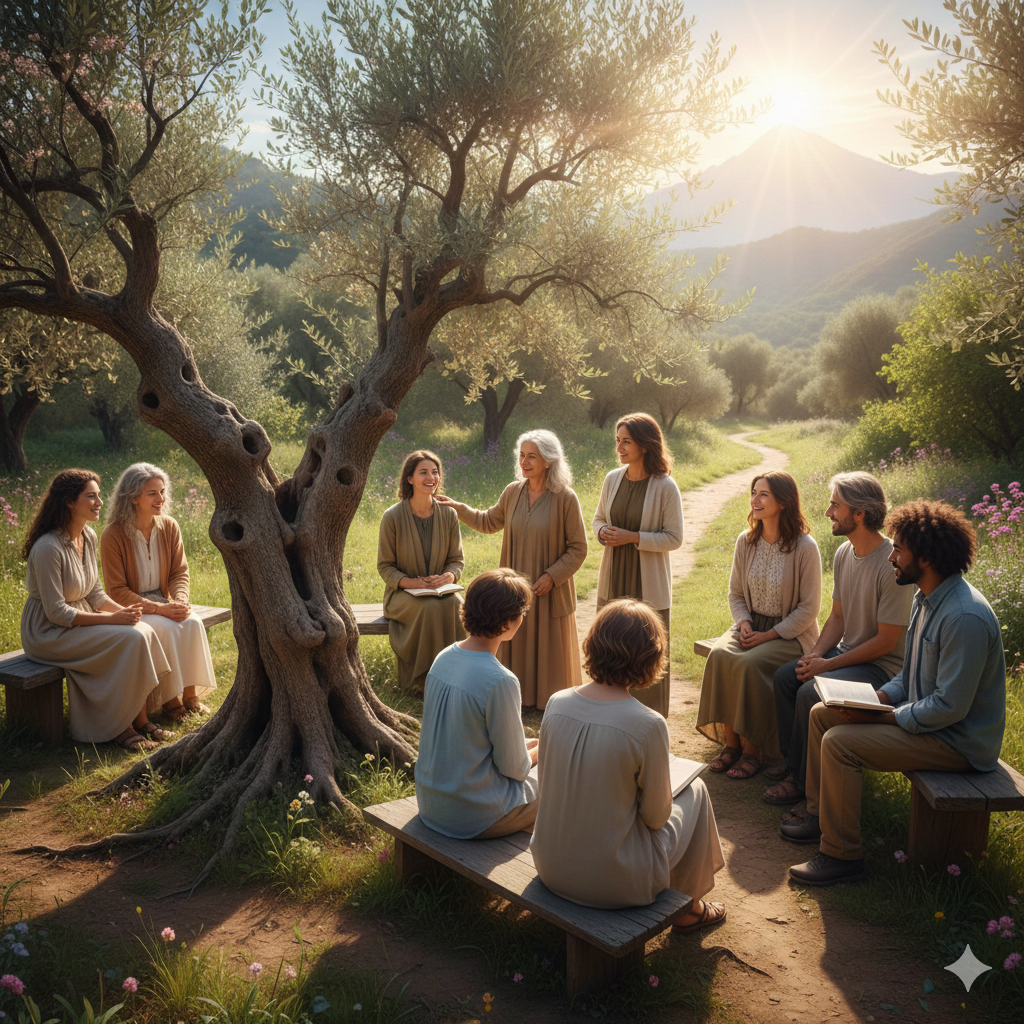
Jesus exemplified this relational discipleship by not only transforming His followers but also nurturing their development. He guided them through every aspect of their lives, creating an environment of godliness that allowed them to trust Him completely. Despite their mistakes and shortcomings, Christ provided a space for them to mature in their faith. Through His rebukes and “affirmations,” He directed their paths, always leading them toward growth. His commitment to them did not end with His ascension; He continued to guide them through the Holy Spirit and the church.
In creating a supportive environment, Jesus ensured that His disciples could continue their growth and carry on the mission. The early church, though faced with challenges from the world, was able to fulfil the great commission of making disciples. This was made possible through the church community, where followers were nurtured and sent out to baptize and teach others in the name of the Father, Son, and Holy Spirit (Matthew 28:19). Through relational discipleship and the nurturing environment Jesus created, the disciples were equipped to spread the gospel to all nations.
Charism: The work of the Godhead
In all phases of discipleship, it is evident that a disciple is motivated, guided, nurtured, and transformed under the influence of their master. The relationship between the master and the disciple involves the disciple carrying the master’s vision and passing it on to the next generation of disciples.[5] However, within the context of Christianity, the task of discipleship is ultimately the work of the Godhead—the Father, the Son, and the Holy Spirit—working together to accomplish this mission. Unfortunately, in contemporary Christianity, many churches focus on attracting crowds and give credit to pastors or individual performers, often measuring others based on their “contributions” [6] rather than their spiritual role in discipleship.
Scripture emphasizes the central role of Christ and the Holy Spirit in the discipleship process. Jesus asserts, “I am the way and the truth and the life. No one comes to the Father except through me” (John 14:6), and further explains in John 15:1, “I am the true vine, and my Father is the gardener.” The work of the Holy Spirit is also highlighted in Romans 8:14, where the Apostle Paul declares, “For those who are led by the Spirit of God are the children of God.” While human intervention may be involved in making disciples, it is Christ, in His goodness, who works and “manifests through His church.” [7] Thus, it is clear that the work of discipleship is carried out by the Godhead, with each member playing a vital role in transforming and maturing believers.
Conclusion
In examining the essence of discipleship, it becomes evident that God’s relational approach is foundational to His mission. Discipleship, originating from the beginning of creation, is more than a program or strategy; it is a continuous, personal investment in shaping individuals for a purpose greater than themselves. God’s interventions, His nurturing guidance, and the transmission of His teachings through generations underscore the essential nature of discipleship in spiritual growth and transformation. As exemplified in the Bible, discipleship is a divinely coordinated process intended to foster a relationship with the Creator, leading disciples to carry forward the mission of the Gospel with truthfulness and conviction.
Relational discipleship, modeled by Jesus, highlights the transformative power of close association with a mentor. Jesus’ investment in a few chosen disciples was strategic and intentional, underscoring the impact that deep, personal engagement can have over program-centered methods. His emphasis on relationship rather than mere structure demonstrates that true discipleship thrives in an environment where people are deeply valued and nurtured. This relational investment develops loyalty, spiritual maturity, and a desire to carry forward the master’s vision, impacting future generations. As Ogden emphasizes, today’s church faces the challenge of shifting from a program-based approach to a relational discipleship model, where transformation and genuine community take precedence.[8]
Moreover, relational discipleship emphasizes an enduring commitment to spiritual growth and the importance of character development within a supportive community. Just as Jesus cultivated an environment of trust and accountability, today’s disciples benefit from environments that encourage authenticity, mutual trust, and guidance from mentors. Communities that develop these values empower disciples to overcome spiritual self-satisfaction and actively engage in their spiritual journey. As illustrated in Jesus’ example, the role of a nurturing community and consistent mentorship is critical for lasting transformation, which, in turn, fuels the collective mission of making disciples who are equipped to disciple others.
Ultimately, the Godhead’s role in discipleship is central to its success, as it is the Father, Son, and Holy Spirit who work together to transform and empower believers. While human involvement plays a role in mentorship, discipleship’s effectiveness depends fundamentally on divine intervention. Jesus’ words in John 14:6, declaring Himself “the way and the truth and the life,” affirm that authentic discipleship stems from following Christ and relying on the Spirit’s guidance (John 15:1; Romans 8:14). God, through His presence in believers’ lives, ensures that discipleship is more than human effort; it is a spiritual calling guided and fulfilled by His power, ensuring that each generation is prepared to carry out His work.
References
Gonçalves, Kleber D. “Transforming Discipleship: Opportunities in Following the Master in a Postmodern World” 12.2 (2016).
Hull, Bill. The Complete Book of Discipleship: On Being and Making Followers of Christ. Colorado Springs, CO: NavPress Publishing Group, 2014.
Meadows, Philip R. “The-DNA-of-Discipleship.” Published by Inspire Movement, International, 2021.
Ogden, Greg. Transforming Discipleship: Making Disciples a Few at a Time. Revised and Expanded Edition. Downers Grove: InterVarsity Press, 2016.