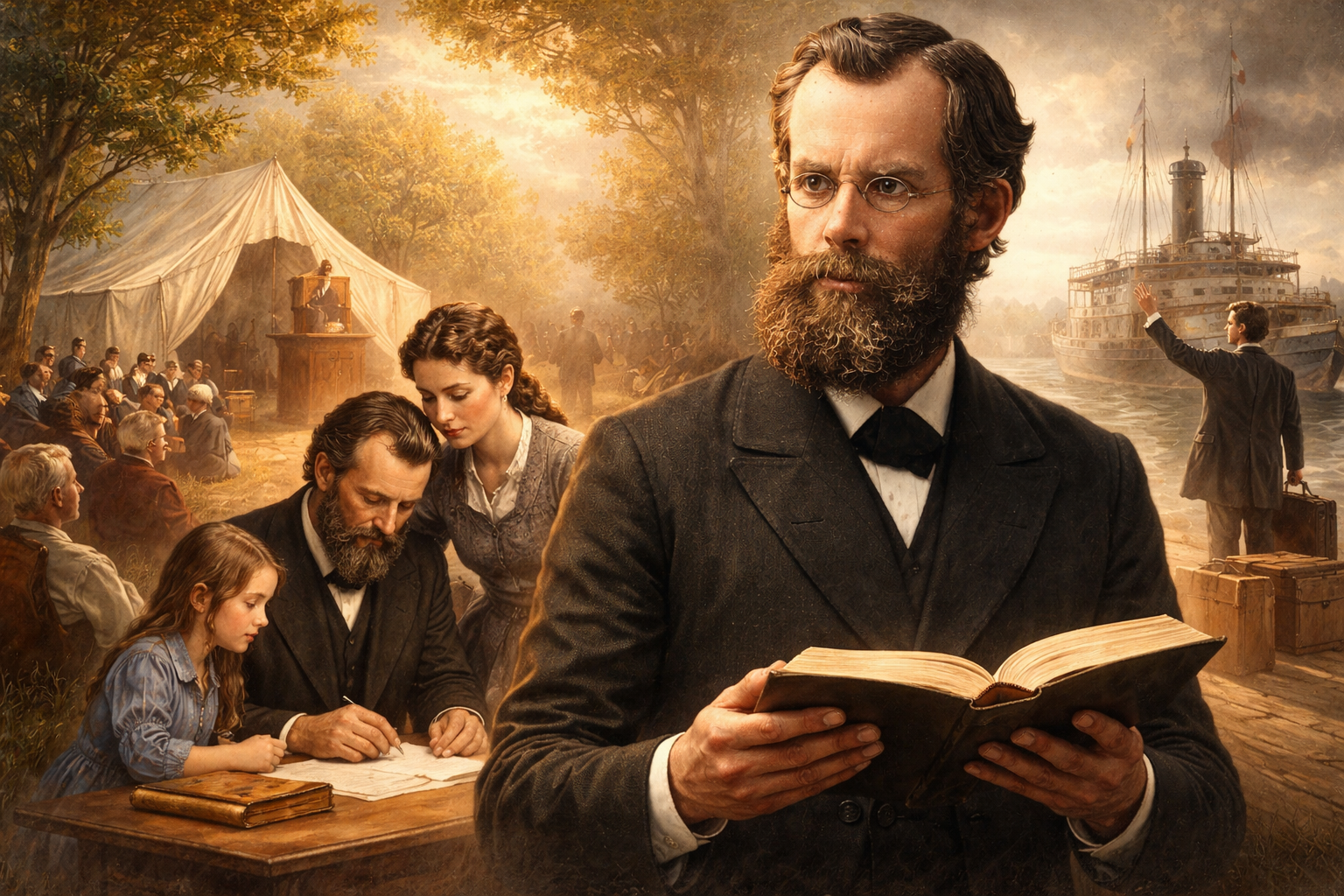
The present Adventist world is involved in missions by sending missionaries to various parts of the world to spread the gospel. Every great work has its beginnings which start either with a person or with the group. Though this mission started with many unofficial pioneers and missionaries, the official work started with a named J N Andrews, the first official missionary of the Seventh-day Adventist Church.
Andrews as a moral man with a high rate of punctuality, common sense, and scholarly knowledge made a great contribution towards the church and its mission. He laid the path and became a light and example to the missionaries of this age. Though he was an able man his dedication to his mission made him lose his health, loved ones, and many luxuries.
Not only as a missionary did Andrews succeed but also as a family man. Though his absence in the house made his wife lonely his commitment and love to his wife before and even after her death proves to be a marking point in Andrews’s family life. Valentine stated that “the details of Andrews’s family background seem at times a little confusing and complicated” but it will be wise enough to understand “the culture and the family circumstances”. Andrews gave much for the mission and lost much for the mission.
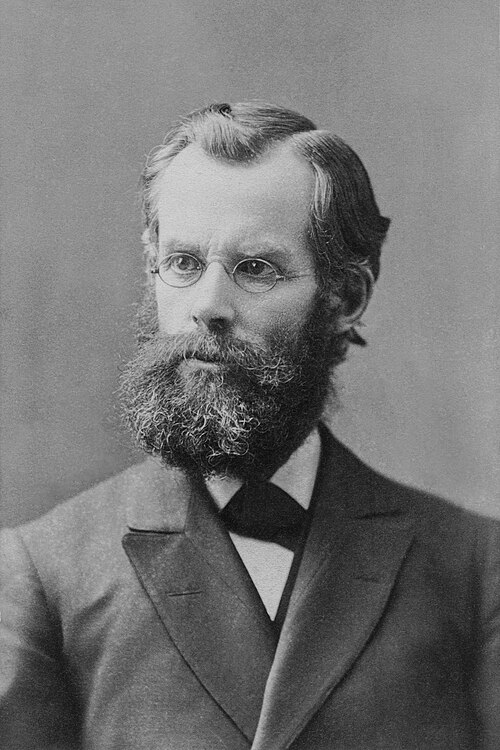
J N Andrews’s conversion and early life and scholarly life
John Andrews was born on July 22, 1829, among in total of three children, only Andrews survived. As a boy, Andrews was 6ft tall, well-mannered, and with a good rate of common sense. Looking into religious experience, “he stated simply that he found the savior in 1843 at 13 and began to keep the Sabbath toward the end of the year 1845”, he accepted the sabbath message at the age of 15. Understanding his ministry calling he wrote that, “near the latter part of 1850 I entered the work of Christian ministry and to this life, my life is still consecrated.”
Commenting on J N Andrews, Ellen White once said, “the noblest of our ranks”. He is the best theologian, he read the entire bible at least 27 times and can recite the entire New Testament by memory. He is a man of prayer and one who is committed entirely to his mission.
Andrews: The Family man
The words from his wife Angeline Andrews explain Andrews as a family man.
“About 12 Friday night my husband arrived home. I was awakened by his calling my name at our bedroom window. Oh, my heart leaped with joy at the sound of his dear voice.”
After the death of Angeline, when many people along with Mrs. White suggested he remarry, Andrew said that “he still retained his affectionate loyalty to his dead wife and took great comfort from the love and companionship of his children.”
Losses and sacrifices of Andrews
Listing out some of the losses of J N Andrews:
“On August 1864, the Andrews’ fourth and lost child was born, a little girl, they named Crrie Matilda, giving her the same initials as her big brother. She would live just a little more than a year, dying in September of 1865 of dysentery.”
Andrew’s desire and passion for the mission made him spend more time preaching and traveling to many places which made the couples talk mostly through letters. On his mission trip in 1859, in his absence at home, his mom, his son Charle, and his wife Angeline suffered from a serious illness but still he focused on the mission. The death of Angeline is another heartbreak for Andrews. Writing about Angeline after death, Andrews stated these words;
“I hear bear the record to the fact that she has done the utmost in her power to help me to go out to labor in the cause of God, and has never once complained when I have remained long absent. During the entire period of our married life, no unkind word ever passed between us, and no vexed feeling ever existed in our hearts.”
The death of Mary his daughter is another great loss that he faced after the death of his wife Angeline. This is because of poverty and the lack of good nutritious food.
“Mary’s death was such a moral and physical shock for Andrews that he did not recover from it. He recognized this himself: The restorative power in my seems to be broken down, and since the death of Mary it has been impossible me to rally.”
The Enduring Legacy of J. N. Andrews
Andrews’s conversion and his commitment to the mission are very important to notice. “Near the latter part of 1850, I entered the work of Christian ministry and to this life, my life is still consecrated.” At the age of 20, he accepted the calling and started to involved in ministry. God’s calling is sure for everyone and it is one’s responsibility to accept and consecrate life to God just like Andrews.
The sacrifices of Andrews are very significant. Despite his infant child’s death, his wife’s death, and later his daughter Mary’s death, he still didn’t give up on the mission. He trusted in God, did his best for the mission, and laid a great example to every century’s believer that despite losses, one needs to go forward in serving God.
BIBLIOGRAPHY
Leonard, H., & Andrews, J. N. (1985). J.N. Andrews – the man and the mission. Andrews University Press.
Valentine, G. M. (2019). J.N. Andrews: Mission pioneer, evangelist, and thought leader. Pacific Press Publishing Association.(Leonard & Andrews, 1985; Schwarz & Greenleaf, 2000; Valentine, 2019).
Oosterwal, G. (2019). The Legacy of J. N. Andrews. Journal of Adventist Mission Studies, 15(2), 155–164. https://doi.org/10.32597/jams/vol15/iss2/10/.