Recently, I had a long conversation with one of my close friends from high school and college. As we shared our thoughts and experiences, she opened up about a personal struggle. With honesty in her voice, she told me that she could not forgive certain people from her past. I tried to encourage her, offering reasons why forgiveness matters, but she remained firm: “I just cannot forgive them.”
This friend is a faithful Christian. She keeps the faith in many ways, but in this area, she struggles. Forgiveness, however, is the only thing that she can’t surrender to God. To walk with Christ means to grow in His likeness, and forgiveness is central to that journey.
Her words stayed with me because they reminded me of a story in the Bible about another believer who also lacked something. He was sincere, he was obedient, and he desired eternal life. Yet when he met Jesus face to face, there was still “one thing” he could not surrender. We read about him in Mark 10:17–22—the story of the rich young ruler.
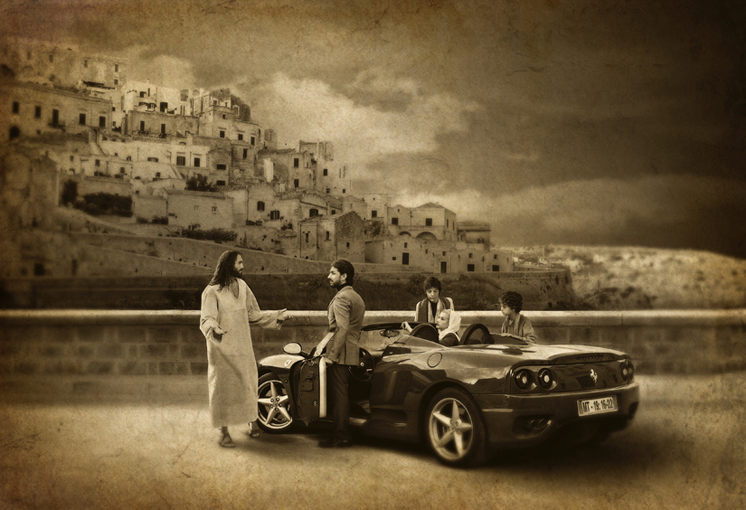
In Mark 10:17–22, we meet a young ruler who came to Jesus with a sincere question. He was wealthy, responsible, and deeply respected. Yet when he heard about Christ, he felt a desire to become His disciple. This longing pushed him to run after Jesus, kneel before Him, and ask with great sincerity: “Good Master, what shall I do that I may inherit eternal life?” — Mark 10:17
Jesus answered that obedience to God’s commandments was necessary for eternal life. The young man quickly responded, “All these things have I kept from my youth.” He had lived a moral life, faithfully keeping God’s law. Still, he felt something was missing.
Then comes one of the most beautiful moments in Scripture: “Jesus, looking at him, loved him.” With deep love, Jesus pointed out what the young ruler lacked. He said, “One thing thou lackest.”
This young man had so much potential. His character and desire for eternal life made Jesus love him. Jesus wanted him to be a co-worker in His ministry. Yet, despite his faithfulness and obedience, something was still missing.
Jesus asked him to give up his wealth and follow Him. It was not just about money, it was about surrender. Christ was asking him to choose the eternal over the temporary, to choose the Giver rather than the gifts. In that moment, the young man had to make a decision: to cling to his possessions or to follow the Savior in the path of self-denial.
It was similar to the challenge Joshua gave Israel in Joshua 24:15: “Choose you this day whom ye will serve.” Every follower of Christ faces the same choice.
But when the young ruler heard this, he became sad. He wanted heaven, but not at the cost of sacrifice. He desired eternal life but also wanted to enjoy his wealth and power. Torn between two loves, he walked away sorrowful.
A Choice We Face Too
This story is not just about him—it is about us. Many times, God calls us to let go of something that stands between us and Him. It may not be wealth, but it could be pride, unforgiveness, unhealthy habits, or even relationships. Like the young ruler, we often want the blessings of God without surrendering everything to Him.
The young man wanted eternal life without Jesus. That is why he left sorrowful. He desired the crown but not the cross. And how often do we do the same? We want the blessings of the Giver, but we do not always want the Giver Himself.
Think about the disciples. As long as Jesus was with them, they had peace. They did not worry about bread, shelter, or clothing. The presence of Christ was enough. Yet today, many of us want His blessings more than His presence.
The question Christ asked that young man still speaks to us today: “One thing thou lackest.”
We may keep the commandments, attend church faithfully, and even serve as missionaries. We may have left many things behind for Christ. Yet, is there still “one thing” that we refuse to surrender?
For my friend, it was forgiveness. For the young ruler, it was wealth. For each of us, it may be something different. What is it for you? What is the one area in your life that you still hold back from God?
Ellen White, in The Desire of Ages, reminds us: “God has set His own standard of character for all who would become subjects of His kingdom. Only those who will become co-workers with Christ, only those who will say, ‘Lord, all I have and all I am is Thine,’ will be acknowledged as sons and daughters of God.” — DA 523.1
The young ruler could not say those words. Instead, he walked away saying, “No, Lord, I cannot give You all.” Do we say the same today?

The Call to Surrender
To follow Christ requires self-surrender. Nothing short of obedience is enough. Christ is not looking for half-hearted followers—He is looking for those who will say, “All I have is Yours.”
Maybe you have already given up much for Christ. Maybe you have been a missionary, a leader, or a servant in His church. But the question remains: Have you fully surrendered? Or is there still “one thing” that holds you back from complete fellowship with Jesus?
The invitation Christ gave to the young ruler is the same invitation He gives to us: “Come, follow Me.” It is not just an invitation to serve but to walk with Him, to enjoy His presence, and to treasure Him above all else.
Even though the young ruler walked away, the story does not end there. The Bible says Jesus loved him. Christ’s love did not fade because of his refusal. That same love reaches out to us today.
When we surrender to Christ, we are not losing but gaining. We are storing up treasures in heaven that will never fade. One day, those who have surrendered fully will hear the most beautiful words: “Well done, good and faithful servant… enter into the joy of your Lord.”
Jesus Himself endured the cross for the joy that was set before Him. He gave up everything so that we could have everything in Him. The question is—are we willing to give Him our all in return?
So, let us reflect: What is your “one thing”? What is still keeping you from fully following Christ? May we not walk away sorrowful like the young ruler, but choose instead to say, “Yes, Lord, all I have and all I am is Thine.”