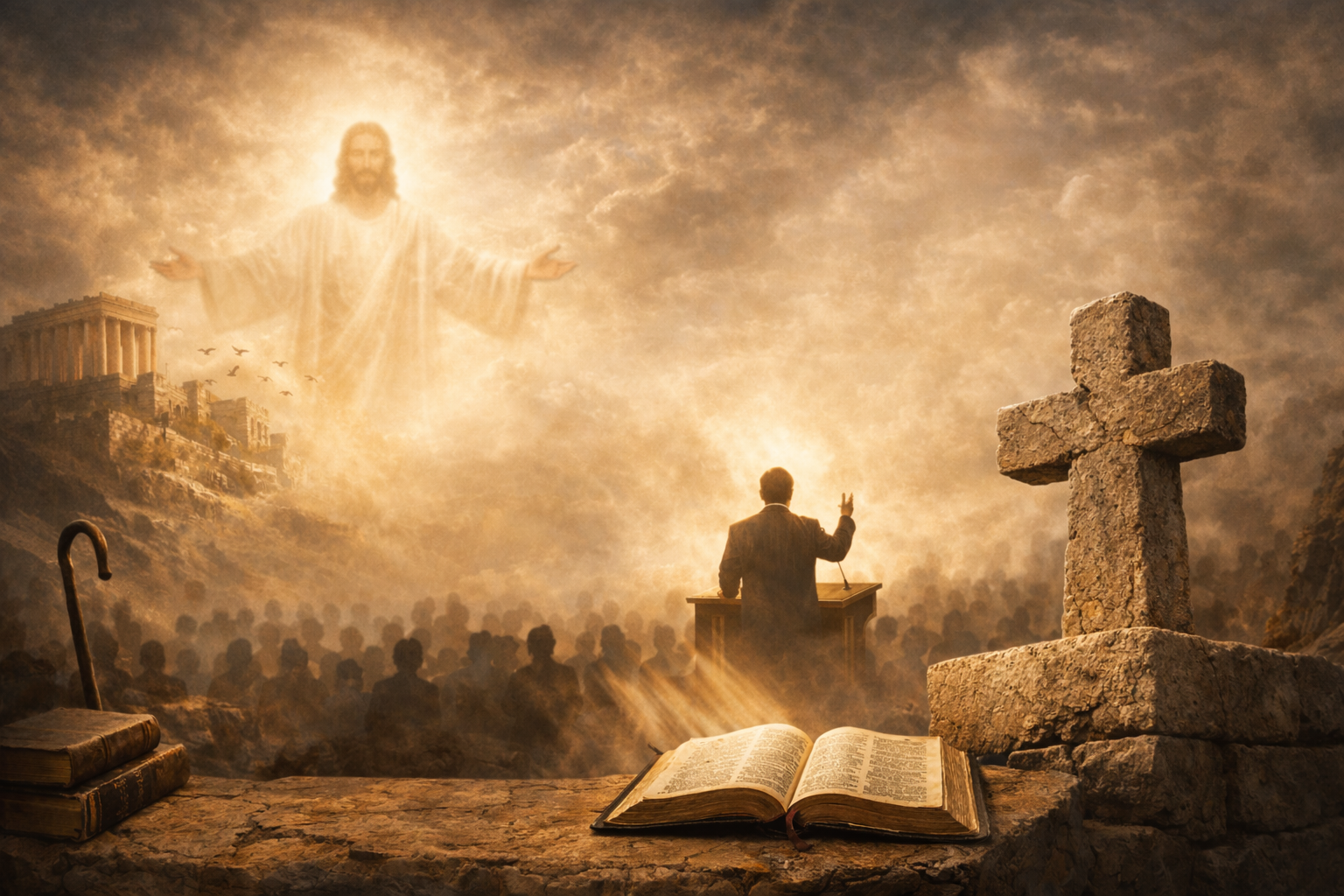

The Christian concept of ministry begins not with human ambition, but with divine initiative. God gives the gospel, then the church, and then appoints the church’s leaders. This sequence reveals that ministers serve the church, and the church serves the Lord of the gospel. As Willimon notes, what makes the church truly the church is the presence of the living Christ among His people. Thus, the ministry is not self-originated; it flows from God’s own calling.
The Calling from Above
Jesus reminded His disciples, “You did not choose Me, but I chose you and appointed you to go and bear fruit”(John 15:16). Likewise, when He called the twelve, He first called them to be with Him before sending them out to preach (Mark 3:13–14). The order is significant. Before one can serve, one must be in communion with Christ. The minister’s strength and authority come not from human training alone, but from being personally called and commissioned by Jesus Himself.
Ellen White’s observation is fitting: “God has a church, and she has a divinely appointed ministry.” Ministry, therefore, is not a profession chosen at will; it is a divine appointment (cf. Heb. 5:4). Many vocations are open to personal choice—teaching, law, medicine—but the ministry is unique because it originates in the will of God.
The Nature of the Divine Call
The Christian ministry is a divine calling. Segler describes it as an inner compulsion born out of communion with God. A sound theology of vocation keeps ministers steady amid criticism or confusion. When a person is deeply convinced that God has entrusted them with the gospel, this conviction anchors them. It prevents them from taking their task either too lightly—as if it were mere work—or too seriously—as if everything depended on them alone. Ministers labor with the awareness that they are not alone in their work.
Two Dimensions of Vocation
The Scriptures and Christian tradition speak of two kinds of vocation: general and unique.
- General Vocation – All believers are called to serve Christ (1 Peter 2:9). Whether in farming, politics, education, or medicine, every Christian vocation is an act of service to God. The Lord of all life calls His people to manifest His kingdom in every sphere of human endeavor.
- Unique Vocation – The call to pastoral or ministerial service is distinct. It is rooted in the doctrine of revelation. God’s Word is His personal message to humanity, and it must be proclaimed by those who have received and understood it. Therefore, God chooses special messengers—prophets, apostles, teachers, and pastors—dedicated to proclaiming His Word. Just as the Word itself is set apart as holy, so are its messengers.
The Word at the Heart of Ministry
The minister’s primary task centers on the Word of God. In Romans 3:1–2, Paul writes that the Jews were “entrusted with the very words of God.” Likewise, ministers today are entrusted with Scripture. In the Old Testament, the priest (כּהֵן, kohen) was not merely one who performed rituals, but a “truth-sayer”—one who mediated the Word of God to the people.
God’s Word operates as both speech and event. The Hebrew term dābār carries this dual meaning: what God says and what God does. His Word is true because His action corresponds to His promise. Thus, faithful ministry always joins proclamation (speaking the Word) with practice (living the Word).
Gifts of the Spirit: Dōrea and Charismata
A divine calling is sustained by divine empowerment. The New Testament speaks of two kinds of spiritual gifts: dōreaand charismata.
- Dōrea refers to the ontological grace—the being-level gift of the Holy Spirit received by every believer (Acts 2:38; 1 Cor 2:12–14). Only those who have received this gift can truly discern and proclaim God’s Word.
- Charismata, on the other hand, are functional gifts for service (1 Peter 4:10–11; Eph 4:11–12). These gifts equip the saints for ministry and build up the body of Christ.
Segler emphasizes that the Christian minister is not a machinist but a workman—shaped by the Spirit to serve with personal conviction and creative faithfulness. God does not use robots; He honors individuality while directing it toward divine purpose.
Assurance of Calling
How can one be sure of being called? The calling is both personal and public. Personally, it involves an inward conviction—a sense of divine direction confirmed through prayer and Scripture. Publicly, it is recognized by the church through ordination and affirmation. Calvin observed that a true minister must discern both the secret inner call and the outward confirmation of the church.
Throughout Scripture, God calls in diverse ways. Moses experienced a dramatic encounter at the burning bush; Isaiah responded voluntarily, saying, “Here am I, send me”; while others, like Jeremiah, hesitated but were compelled by divine insistence. What unites them is not the manner of the call, but its source—God Himself.
Conviction, Motivation, and Service
The integrity of ministry depends not only on the fact of calling but also on the motivation for serving. True ministry is never about economic gain, social prestige, or personal ambition. When the call is divine, the motive becomes love for God and commitment to His people. The assurance of divine vocation enables ministers to endure hardship, resist discouragement, and remain faithful amid change.
To be in ministry is to participate in the continuing work of Christ—prophetic, priestly, and kingly. Through the prophetic Word, the priestly intercession, and the kingly service, the minister becomes an instrument through whom God reaches His people. Ministry is not simply a career choice but a response to God’s initiative. It is a divine calling that begins with Christ’s invitation, “Come, be with Me,” and continues in His command, “Go, and preach My Word.”