
The Amazon River is one of the most powerful rivers on earth. It stretches almost 4,000 miles through South America, and where it meets the Rio Negro near Manaus, Brazil, something amazing happens. The muddy Amazon and the black waters of the Rio Negro flow side by side for miles without mixing. Two very different waters, moving together in one direction.
This picture can remind us of another great river—the river of God’s truth, which flows through the pages of Scripture. At the center of this truth is the sanctuary, the place where God chose to reveal His plan of salvation. Psalm 77:13 says, “Your way, O God, is in the sanctuary.” If we want to understand the work of Jesus and God’s plan for humanity, we must look to the sanctuary.
The Problem of Sin and God’s Plan
From the beginning, God created Adam and Eve in His image. They lived in Eden, enjoying face-to-face fellowship with Him. But when they sinned, separation came between humanity and God. Romans 6:23 reminds us, “The wages of sin is death.” Just like a branch cut from a tree slowly withers, so we die when separated from God, the source of life.
Yet God did not abandon us. He created a plan of salvation to bring humanity back to His presence. The sanctuary became the model of this plan—a way to teach us that sin leads to death but that life is possible through a substitute, through a Lamb.
Lessons from the Old Sanctuary
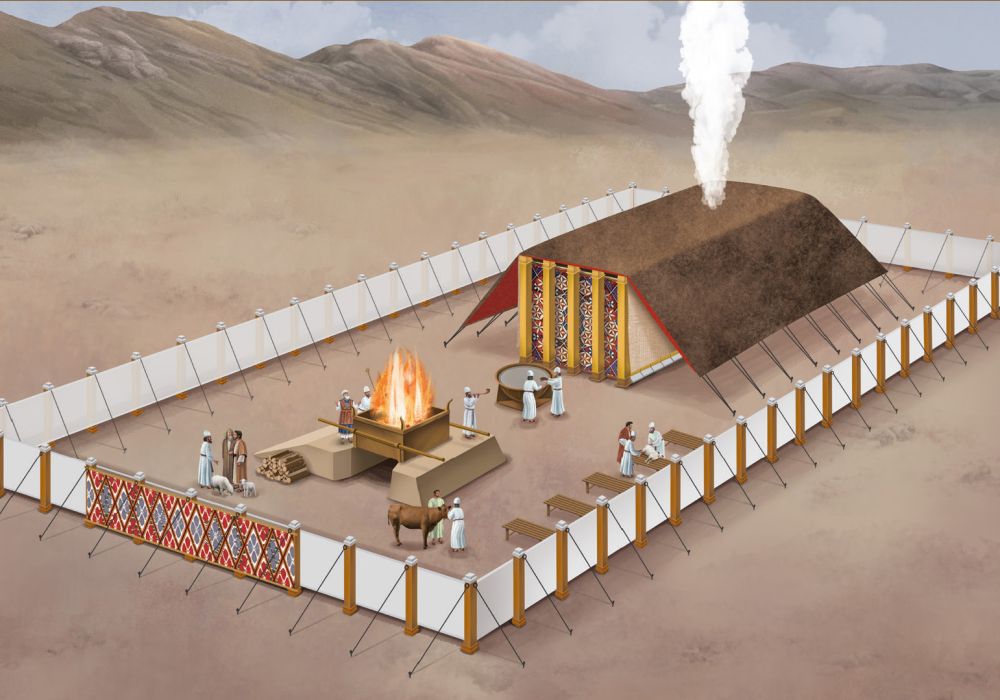
The earthly sanctuary was a tent-like structure with three parts: the courtyard, the holy place, and the most holy place. Each part pointed to Jesus.
The Courtyard: Here stood the altar of burnt offering, where lambs were sacrificed. This symbolized Jesus’ death on the cross. The laver, where priests washed, pointed to cleansing and baptism in Christ.
The Holy Place: Inside were the table of showbread (Jesus the Bread of Life), the lampstand (Jesus the Light of the World), and the altar of incense (the prayers of God’s people offered through Christ’s righteousness).
The Most Holy Place: At its center was the Ark of the Covenant, holding the Ten Commandments, Aaron’s rod, and manna, all under the mercy seat where God’s glory dwelt. This pointed to God’s law, His provision, His authority, and His mercy through Christ.
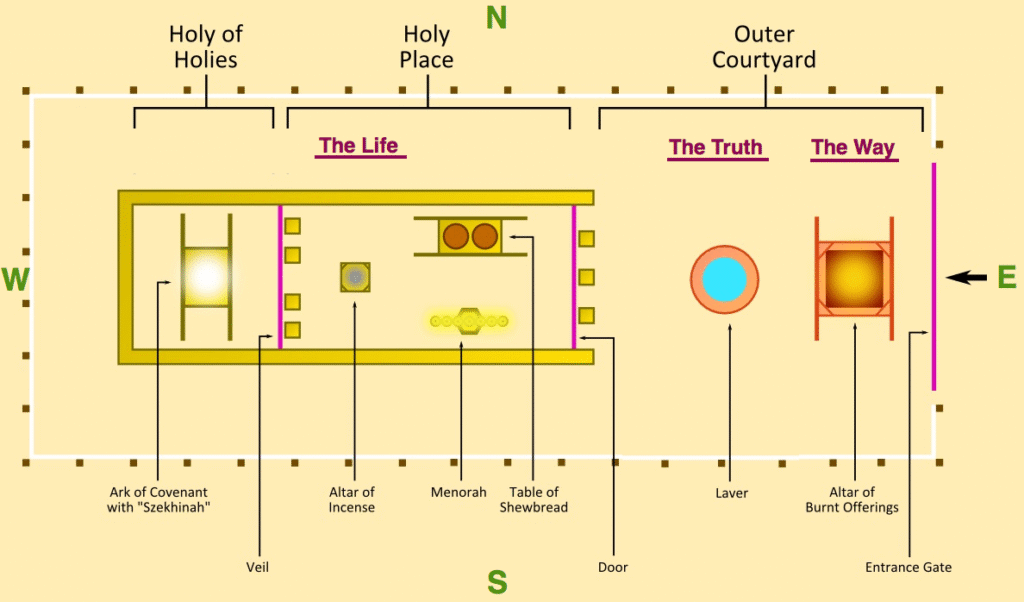
Every part of the sanctuary whispers the same truth: it’s all about Jesus.
In Old Testament times, when someone sinned, they brought a lamb to the sanctuary. The sinner laid hands on the lamb, confessed the sin specifically, and then killed the animal. The innocent lamb died in the sinner’s place.
This may sound harsh, but God wanted His people to understand how serious sin is. Sin destroys life. But He also wanted them to see grace—that every lamb pointed to the true Lamb, Jesus Christ. His death is far more costly than that of any lamb, and through Him we find forgiveness.
Confession was not to be vague—“Lord, forgive me if I have sinned”—but specific: “Lord, today I lied. Today I was angry. Today I was selfish.” True confession brings peace because it lays the burden on Jesus, the Lamb of God.
When Jesus came, He fulfilled every symbol of the sanctuary. He is the Door (John 10:9). Anyone can enter through Him—rich or poor, righteous or sinful. At the altar of the cross, He took our guilt and gave us peace. At the laver, He cleanses us. In the holy place, He sustains us with His word, gives us light for our journey, and accepts our prayers.
And now, He serves as our High Priest in the heavenly sanctuary (Hebrews 9:24). He understands our weaknesses because He was tempted in every way. He knows rejection, pain, sorrow, and even the cry of abandonment. Because He experienced all this, He can walk with us in our struggles and bring us confidently before God’s throne of grace.
There’s a story told from the days of Abraham Lincoln. A young soldier, broken by grief and desperate to help his widowed mother, tried to see the president. Guards turned him away. Sitting in tears, he was noticed by a little boy who took his hand and led him past the guards, right into the president’s office. The boy was the president’s son.
We too cannot enter God’s presence on our own. But the Son, Jesus, takes us by the hand and leads us to the Father. That is the heart of the sanctuary message.
The sanctuary teaches us a journey with Christ. In the courtyard, we are justified—declared forgiven through His sacrifice. In the holy place, we are sanctified—growing through prayer, Bible study, and ministry. In the most holy place, we are glorified—restored to face-to-face communion with God, just as in Eden.
The good news is that salvation begins the moment we accept Jesus. Like the thief on the cross, we are saved by faith, not by waiting until the very end. But God does not stop there—He wants to grow us, cleanse us, and prepare us for eternity.
The door of the sanctuary is still open today. Jesus invites us to lay down our guilt, our burdens, and our past mistakes at His feet. He longs to cleanse us, walk with us, and bring us into God’s presence. One day, the Bible says, “They shall see His face” (Revelation 22:4).
Until that day, the sanctuary reminds us that God’s greatest desire is to dwell with His people. And through Jesus, that desire becomes reality.