Learning from the Story of Cain and Abel
After Adam and Eve sinned in the Garden of Eden, they were sent away from the presence of God. The paradise they once enjoyed was no longer their home. Yet even outside of Eden, God still showed mercy and gave them the gift of life. When Eve gave birth to her first son, Cain, she said, “I have gotten a man from the Lord” (Genesis 4:1). Later, she also bore Abel, who became a keeper of sheep, while Cain worked the ground as a farmer.
Here we see the first children born in a fallen world. Their lives remind us that even though sin entered creation, God’s plan of redemption was already unfolding. Eve likely remembered the promise of Genesis 3:15—that the “seed” of the woman would one day crush the serpent’s head. Perhaps she even wondered if Cain could be the one to fulfill it.
Two Offerings, Two Hearts
As time passed, both Cain and Abel came to worship the Lord. Cain brought an offering from the fruit of the ground, while Abel brought the firstborn of his flock and their fat portions (Genesis 4:3–4). At first glance, both seemed to be acts of devotion. Yet the Lord accepted Abel’s offering but did not accept Cain’s.
This raises the question: what made the difference? Scripture shows us that it was not about the type of offering alone but about the heart behind it. Abel offered in faith, giving the best of what he had, and Cain, as the tiller of the ground, gave the fruit from his labor, and that is acceptable because God is not against grain and fruit offerings (Lev 2:1, 4). However, Cain offered from duty rather than devotion. God looks not only at what we bring but also at the spirit in which we bring it. Worship without the right heart is empty.
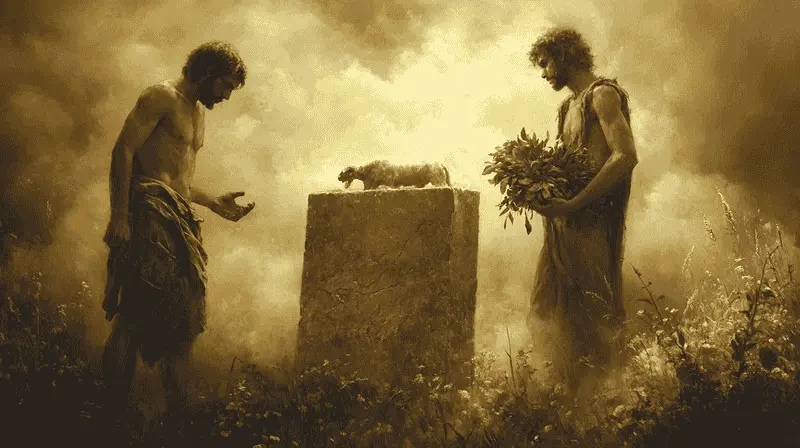
Before the tragedy, Cain, the tiller of the ground, and Abel, the shepherd, bring their respective sacrifices to God.
On the other hand, Cain’s reaction to God’s response revealed the true state of his heart. Instead of humbling himself and seeking to worship in the way God desired, he became angry and jealous. His focus shifted from honoring God to comparing himself with his brother. The Lord warned Cain, “If you do what is right, will you not be accepted? But if you do not do what is right, sin is crouching at your door” (Genesis 4:7).
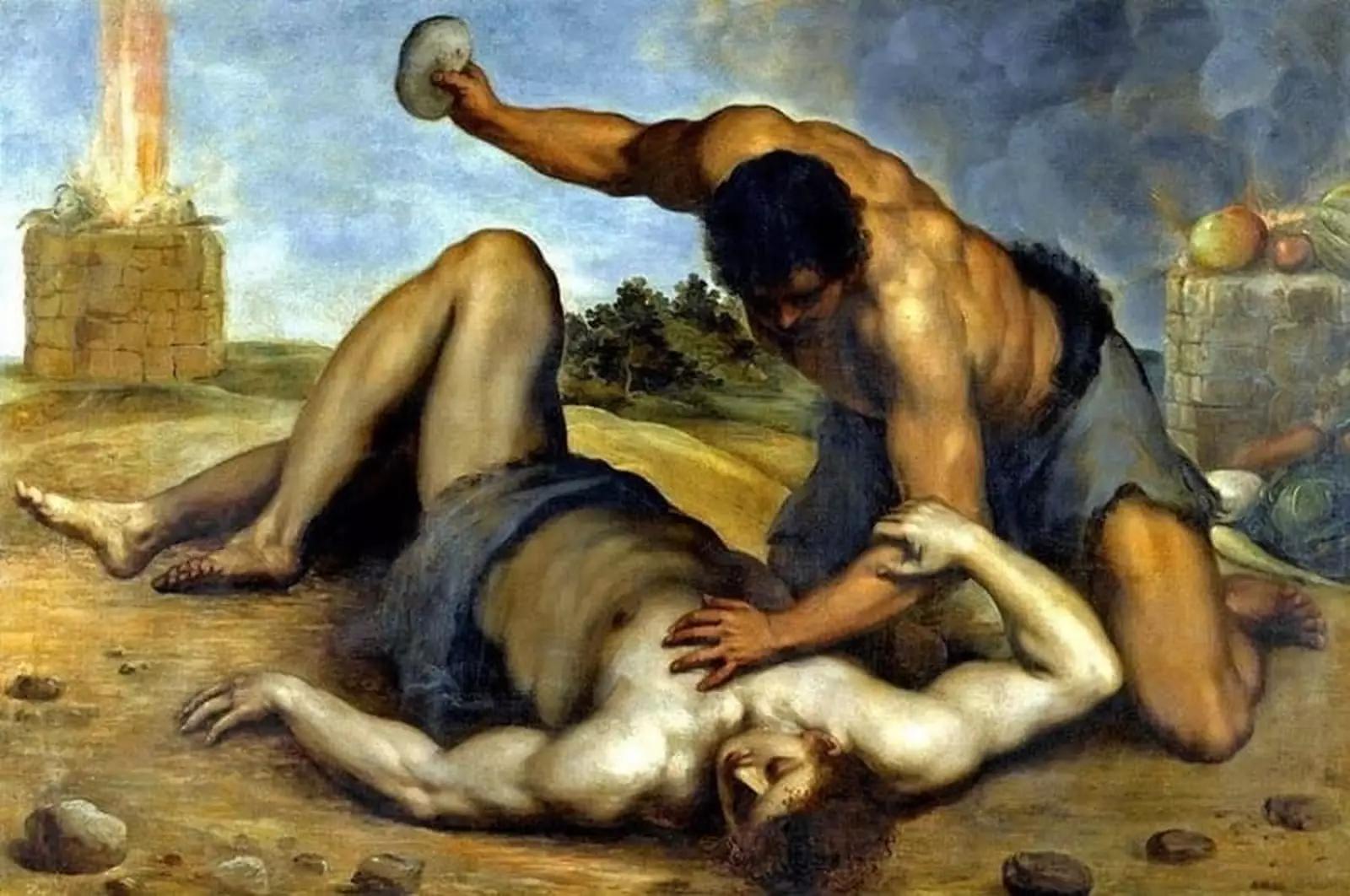
Sadly, Cain did not listen. His anger grew into hatred, and hatred turned into murder. Out in the field, he rose up against Abel and killed him. The one who was meant to live in fellowship with God had now become a fugitive and a wanderer. The way of Cain shows us how worship can be corrupted when pride, jealousy, or self-focus replace obedience and love.
After Abel’s death, God confronted Cain, asking, “Where is your brother Abel?” Cain tried to hide his guilt with the well-known words, “Am I my brother’s keeper?” But God already knew. He said, “Your brother’s blood cries out to me from the ground” (Genesis 4:10).
Here we see that sin never remains hidden. The voice of Abel’s blood became a testimony of Cain’s rebellion. As a result, God declared that the ground Cain worked would no longer yield its strength to him. Separated from the Lord’s presence, Cain carried a heavy punishment, saying, “My punishment is greater than I can bear” (Genesis 4:13).
This part of the story reminds us that sin always leaves a mark. Yet it also points us forward to the blood of Christ, which speaks a better word than the blood of Abel (Hebrews 12:24). Abel’s blood cried for justice, but the blood of Jesus cries for mercy, forgiveness, and restoration.
What does this teach us?
The story of Cain and Abel is not just history—it is a mirror for our own hearts. It teaches us that worship is more than rituals, songs, or offerings. True worship is about the heart. It is about coming before God with faith, humility, and obedience.
When we give God our best—not half-hearted devotion—we honor Him. When we surrender pride and jealousy, we draw closer to His presence. Worship is not measured by outward appearance but by inward sincerity. As Jesus said, “God is spirit, and his worshipers must worship in the Spirit and in truth” (John 4:24).
The New Testament warns us not to follow “the way of Cain” (Jude 1:11). That way is the path of self-centeredness, anger, and rebellion. Cain’s story shows how small choices in worship and obedience can grow into destructive outcomes. Instead, we are called to the way of Abel—a life that offers God the best in faith and trust.
We must examine our hearts when we come to church, when we sing, when we pray, or when we serve. Are we doing these things to please God or to please ourselves? Are we offering the first and best of our time, energy, and devotion, or are we holding back? The heart of worship is about giving God what He deserves, not what is convenient for us.
As this narrative continues, one of the saddest parts of this story is found in Genesis 4:16: “So Cain went out from the Lord’s presence.” To be cut off from God is the deepest loss any human can face. Yet through Christ, we are invited back into fellowship with the Father. His sacrifice restores us to the presence of God and gives us a new heart to worship rightly.
Every time we worship, we are reminded that God desires relationship, not ritual. He calls us to bring offerings not just with our hands but with our hearts. Worship that flows from gratitude, faith, and love is the kind that pleases Him.